Introduction
Dairy products are part of everyday life. From milk and curd to lassi, buttermilk, yogurt, and ice cream, consumers expect these products to reach them fresh, safe, and in good condition. While product quality plays a major role in customer satisfaction, packaging also has an important part to play.
For dairy manufacturers, choosing the right packaging is a business decision that affects product safety, transportation, storage, customer experience, and brand reputation. Poor packaging can lead to leakage, product spoilage, damaged containers, and unnecessary product losses. On the other hand, well-designed dairy packaging helps protect the product, supports efficient distribution, and creates a positive impression on customers.
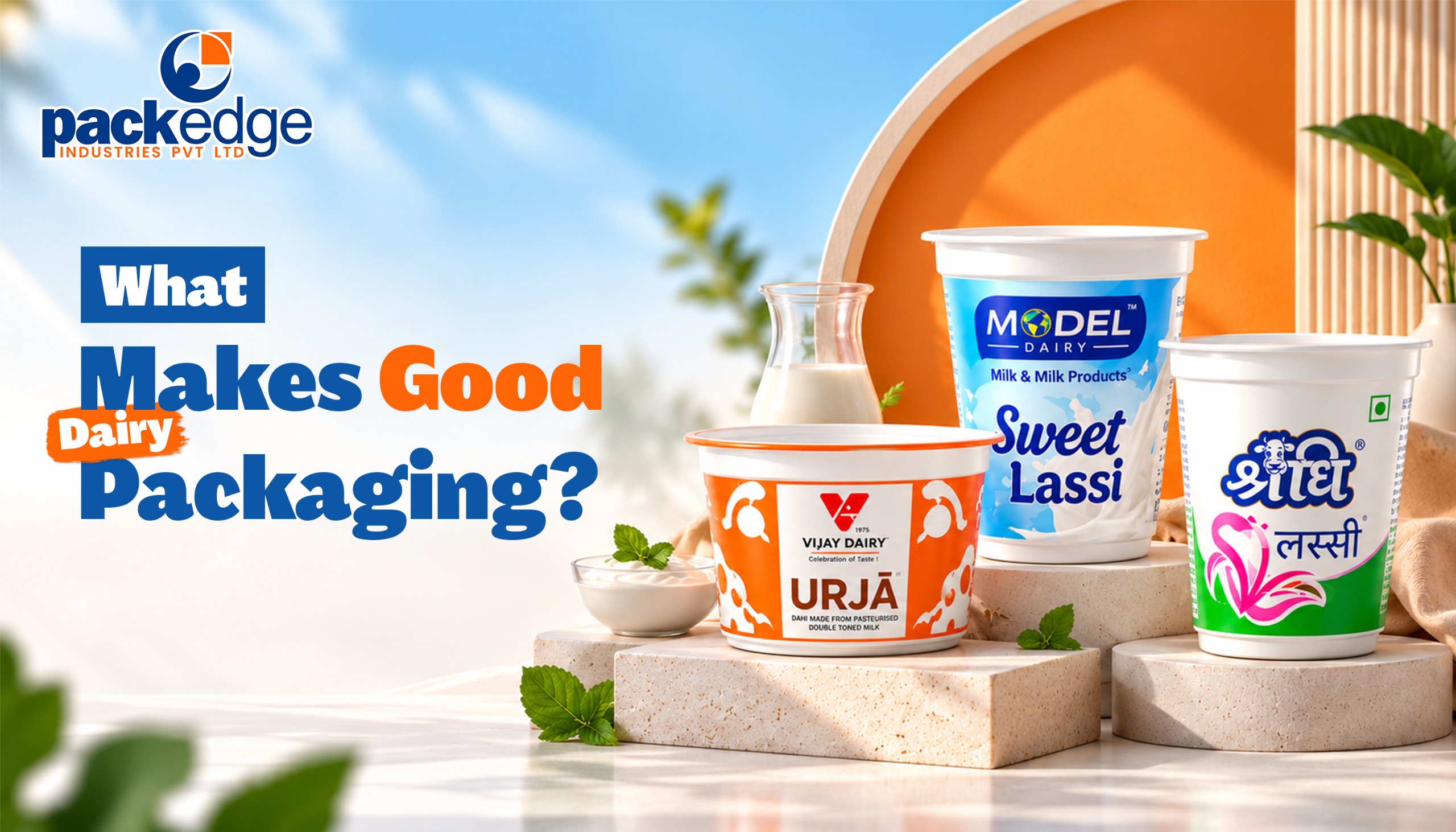
But what makes dairy packaging good? Is it the material, durability, design, or cost?
The answer lies in finding the right balance between these factors. In this guide, we explore seven important factors dairy manufacturers should consider when selecting dairy product packaging and how the right packaging partner can support their business goals.
1. Food Safety and Hygiene
Food safety should always be the first consideration when choosing dairy packaging. Milk-based products are sensitive to contamination, and unsuitable packaging can put product quality and consumer safety at risk.
Dairy packaging must be suitable for direct or indirect contact with the specific food product, as applicable. The materials should meet relevant food-contact requirements and be appropriate for the product’s composition, storage conditions, and intended use.
What should manufacturers consider?
- Food-grade materials: Select packaging materials that meet applicable food-contact safety requirements.
- Clean manufacturing conditions: Packaging should be produced and handled under appropriate hygiene controls.
- Product compatibility: The packaging material should be suitable for the acidity, fat content, moisture, and other characteristics of the dairy product.
- Reliable quality checks: Consistent inspection helps identify defects before packaging reaches the production line.
For example, yogurt and curd packaging must be suitable for products with their particular moisture levels and acidity. Similarly, milk and flavoured dairy beverages require packaging that supports the intended filling, storage, and distribution process.
Manufacturers should also ensure that packaging specifications align with applicable food safety regulations in their target markets.
Good dairy packaging begins with protecting the product inside. Without a reliable foundation of safety and hygiene, even the most attractive packaging cannot deliver the right customer experience.
2. Leak-Proof Design and Packaging Strength
Leakage is one of the most common packaging concerns in the dairy industry. A small defect in a cup, lid, seal, or container can result in product loss, damaged cartons, messy storage areas, and customer complaints.
For manufacturers supplying retailers, distributors, restaurants, or institutional buyers, these problems can also increase handling costs and affect business relationships.
Why does leak-proof dairy packaging matter?
Dairy products often move through several stages before reaching the consumer. They may be filled at a production facility, packed into secondary cartons, transported in refrigerated vehicles, stored in distribution centres, and handled at retail outlets.
During this journey, packaging may experience stacking pressure, movement, vibration, and changes in temperature. It must be designed to withstand the conditions expected during its intended use.
Manufacturers should evaluate:
- The strength and stability of the container.
- The fit between the cup, container, and lid.
- The consistency of the sealing process.
- Resistance to expected handling and transportation stresses.
- Compatibility with filling and sealing machinery.
For products such as curd, yogurt, lassi, and other dairy beverages, secure sealing can help prevent leakage and preserve packaging integrity.
However, a leak-proof design alone is not enough. Manufacturers should conduct suitable seal-integrity, handling, and transportation tests under representative conditions before approving a packaging solution for regular production.
Reliable dairy packaging helps reduce avoidable waste and gives customers greater confidence in the product.
7. Branding, Visual Appeal, and Cost Efficiency
Dairy packaging is more than a protective layer. It is also a direct point of communication between a brand and its customers.
In a retail environment, consumers often make quick decisions based on product recognition, packaging appearance, price, and familiarity. A clear, consistent design helps a dairy brand stand out while communicating the information customers need.
At the same time, packaging must remain commercially viable. Manufacturers need to balance visual appeal with production efficiency, material costs, and distribution requirements.
How can packaging support brand identity?
Consistent brand colours: Using recognisable colours across product ranges helps customers identify the brand quickly.
Clear product identification: The packaging should make it easy to distinguish between products such as plain yogurt, flavoured yogurt, lassi, and other dairy beverages.
Readable information: Product names, quantities, ingredients, storage instructions, and other required label details should be presented clearly.
Application-specific design: Packaging should reflect the product category and the brand’s positioning while remaining practical for everyday use.
For dairy manufacturers, customised packaging can help create a more consistent brand presentation across different product lines. The right colours, print quality, container shape, and lid design can contribute to a professional appearance.
How should manufacturers evaluate packaging costs?
The lowest-priced packaging option is not necessarily the most economical choice.
A cheaper container that causes sealing problems, slows down filling operations, or results in damaged products may increase the overall cost of production.
Manufacturers should consider the total cost of packaging, including:
- Material and unit purchase costs.
- Storage and transportation requirements.
- Filling-line speed and compatibility.
- Product losses caused by packaging defects.
- Rejection rates and quality-control expenses.
- Minimum order quantities and inventory management.
For example, a packaging solution that offers a slightly higher unit price may still provide better value if it reduces production interruptions and product damage.
The objective is to find packaging that meets quality requirements, supports efficient operations, and fits the business’s commercial goals.
People also want to know about packaging quality checklists: Packaging Quality Checklist: What Should Businesses Inspect Before Bulk Ordering?
Additional Considerations Before Finalising Dairy Packaging
The seven factors above provide a useful starting point, but manufacturers should also review a few practical considerations before placing a large packaging order.
Test packaging with the actual product
Packaging performance should be assessed using the intended dairy product and the expected production conditions. Trials can help identify issues with sealing, handling, filling, and storage before full-scale implementation.
Check supplier consistency
Manufacturers need packaging that performs consistently across batches. Variations in dimensions, material quality, or lid fit can create avoidable difficulties on automated production lines.
Ask potential suppliers about their quality-control procedures, product specifications, and ability to maintain consistent supply.
Plan for production and distribution requirements
Packaging should suit the manufacturer’s filling equipment, order volumes, warehouse conditions, and delivery network. A solution that works for a small local dairy business may not meet the needs of a large-scale manufacturer supplying multiple regions.
Review compliance and documentation
Confirm that the packaging meets applicable food-contact requirements and that the necessary specifications and supporting documentation are available.
A careful evaluation at the beginning can help manufacturers avoid costly changes after production has started.
Why Packedge Industries Is a Practical Packaging Partner for Dairy Manufacturers
Choosing the right packaging supplier is an important step towards maintaining consistent product quality and efficient operations. Dairy manufacturers need solutions that suit their products, work with their production processes, and support their brand’s requirements.
Packedge Industries provides dairy packaging solutions for businesses looking for practical, dependable packaging for their product ranges. Its focus on dairy packaging makes it a relevant partner for manufacturers evaluating packaging options for products such as yogurt, curd, beverages, and other food applications.
How can Packedge Industries support your packaging requirements?
Packaging suited to your application: Different dairy products have different requirements. Manufacturers can discuss their intended applications and evaluate suitable packaging options.
Brand presentation: Packaging plays an important role in how consumers recognise a product. Businesses can explore options that support consistent brand colours and a professional retail appearance.
Practical product protection: Packaging selection should account for container strength, lid compatibility, sealing performance, and the conditions products experience during distribution.
A business-focused approach: The right packaging decision considers product requirements, production processes, commercial priorities, and customer expectations together.
Before finalising an order, manufacturers should discuss product compatibility, available sizes and designs, material specifications, quality checks, order quantities, and supply timelines with the Packedge Industries team.
This helps ensure that the selected packaging aligns with the manufacturer’s operational requirements instead of relying on appearance or price alone.
Conclusion
Good dairy packaging brings together food safety, leak prevention, shelf-life requirements, material performance, consumer convenience, sustainability, and cost efficiency. Each factor contributes to how well the packaging protects the product, supports production, and represents the brand in the market.
The right choice depends on the type of dairy product, its storage conditions, the filling process, distribution requirements, and customer expectations. Manufacturers who evaluate these factors before selecting packaging are better positioned to minimise avoidable losses, maintain consistent quality, and deliver a dependable customer experience.
Packaging should be treated as an essential part of the dairy product, not simply as a container. A well-considered packaging solution can support operational efficiency while helping a brand build trust with consumers.
Looking for the Right Dairy Packaging for Your Business?
Your dairy product deserves packaging that supports its quality, protects it during handling, and presents your brand professionally.
Connect with Packedge Industries to discuss your dairy packaging requirements and explore suitable packaging solutions for your product range. Whether you are reviewing your current packaging or planning a new product launch, the Packedge Industries team can help you evaluate options based on your product, production needs, and brand goals.
Visit https://packedgeindustries.com/ to learn more and take the next step towards finding the right packaging for your dairy business.